If you’re comparing Nikon vs Celestron binoculars, the best choice depends on what you actually plan to do with them. Nikon is usually the better fit for people who want something compact, comfortable, and easy to carry for travel, hiking, sports, or casual outdoor viewing. Celestron, on the other hand, is often the smarter pick for stargazing, beginner birding, and buyers who want more magnification or better glass for the money. Both brands make good binoculars, but they serve different types of users and that’s exactly what this guide will help you sort out.
Short version: go with Nikon if you want something light and grab-and-go for hiking, travel, or sports. Go with Celestron if you care more about astronomy, ED glass, or getting the most binocular for your money as a beginner.
That’s the quick take. Below, we get into six actual models three from each brand and put them head-to-head so you can see exactly why.
Affiliate disclosure: As an Amazon Associate, we may earn from qualifying purchases.
Best picks at a glance
Before diving into the details, here’s where each brand tends to pull ahead, model by model.
How the two brands actually compare
Zoom out from individual products and a pattern emerges pretty quickly Nikon and Celestron tend to trade wins in the same handful of categories every time.
| Category | Nikon | Celestron | Winner |
|---|---|---|---|
| Travel and hiking | Better | Good | Nikon |
| Birdwatching | Good | Better value | Celestron |
| Stargazing | Basic | Strong | Celestron |
| Zoom options | Better | Limited | Nikon |
| Beginner value | Good | Better | Celestron |
| Compact models | Better | Average | Nikon |
| High magnification | Limited | Better | Celestron |
| ED glass value | Limited | Better | Celestron |
In plain terms: Nikon wins when portability and flexibility matter most. Celestron wins when raw magnification, light-gathering power, or beginner-friendly pricing matter most. Neither pattern is an accident it’s baked into how each company built its lineup.
How we compared these binoculars
We looked at magnification, objective lens size, field of view, eye relief, weight, waterproofing, whether a tripod is needed, and how each model performs for its intended use case, then weighed that against current Amazon pricing and availability. None of this replaces looking through the binoculars yourself if you can, but it’s a solid way to narrow six models down to one or two worth testing.
Where each brand actually shines
Nikon tends to win on:
- Compact, travel-friendly builds
- Comfortable handheld use
- A stronger zoom option in this lineup
- General optics reputation from its camera lens heritage
Celestron tends to win on:
- Astronomy and long-distance viewing
- Beginner-friendly pricing
- ED glass value
- High-magnification models
Who Should Avoid Nikon or Celestron?
It is just as useful to know when not to choose a brand. Nikon and Celestron both make good binoculars, but each brand has clear limits.
Skip Nikon if:
- You need serious astronomy power none of these three Nikon models are built for deep-sky or heavy moon-viewing use.
- You want ED glass at a budget price Nikon does not offer an ED option in this comparison.
- You are on a tight beginner budget Celestron’s Nature DX line usually gives better value for entry-level birding.
Skip Celestron if:
- You want the most compact, pocket-friendly option Celestron’s models here are larger than the Nikon Trailblazer.
- You need a flexible zoom range Celestron does not have a zoom model in this comparison.
- You want a lightweight all-day carry for hiking the SkyMaster is too heavy, and even the Nature DX models are bulkier than the Nikon Trailblazer.
Bottom line: Skip Nikon if your priority is astronomy, budget ED glass, or lowest beginner price. Skip Celestron if your priority is compact travel, lightweight hiking, or zoom flexibility.
Head-to-head: the closest matchups
Brand-level generalities only get you so far. Here’s how the most comparable models from each side actually stack up.
Nikon Binoculars Reviewed
Nikon’s strength in this comparison lies in handheld comfort, travel-ready builds, and outdoor durability. The three models below cover a zoom binocular, a compact travel pick, and a 10×42 built for wildlife and birding at a bit more distance.
Celestron Nature DX ED 8×42 vs Nikon PROSTAFF 7S 10×42
This one comes down to birding image quality versus raw reach. The Celestron’s ED glass and wider field of view make it easier to track birds and pick out plumage detail, while the Nikon’s extra 2x magnification helps when wildlife is further out.
| Feature | Celestron Nature DX ED 8×42 | Nikon PROSTAFF 7S 10×42 |
|---|---|---|
| Best for | Birding image quality | Distant wildlife |
| Magnification | 8x | 10x |
| Strength | ED glass, wide view | More reach |
| Weakness | Bigger than compact models | Older model |
Verdict: Pick the Celestron for birding comfort and image quality. Pick the Nikon if distance matters more than glass quality.
Celestron SkyMaster 25×70 vs Nikon ACULON A211 Zoom 10-22×50
One of these is a dedicated astronomy tool, the other is a flexible daytime performer. The SkyMaster’s 25x magnification and 70mm lenses are built for the sky and basically require a tripod. The ACULON’s zoom range makes it more useful for sports, wildlife, and casual outdoor use where you want to dial magnification up or down on the fly.
| Feature | Celestron SkyMaster 25×70 | Nikon ACULON A211 10-22×50 |
|---|---|---|
| Best for | Stargazing | Flexible zoom |
| Magnification | 25x | 10-22x |
| Tripod need | Yes | Helpful at high zoom |
| Portability | Poor | Average |
Verdict: Go Celestron for moon viewing and stargazing. Go Nikon if you want zoom flexibility for everyday outdoor use.
Nikon Trailblazer 8×25 vs Celestron Nature DX 8×42
This is really a size-versus-substance question. The Trailblazer disappears into a jacket pocket but gives up low-light performance to get there. The Nature DX is bulkier but brighter, with a more forgiving view for beginners still learning to find birds in frame.
| Feature | Nikon Trailblazer 8×25 | Celestron Nature DX 8×42 |
|---|---|---|
| Best for | Travel/hiking | Beginner birding |
| Size | Compact | Full-size |
| Low light | Weak | Better |
| Portability | Excellent | Average |
Verdict: Nikon if you want something pocket-friendly. Celestron if you want a better everyday outdoor view.
Nikon Binoculars Reviewed
Nikon’s strength here is handheld comfort and travel-ready builds. These three cover a zoom binocular, a compact travel pick, and a 10×42 aimed at birders and hunters who want a bit more reach.
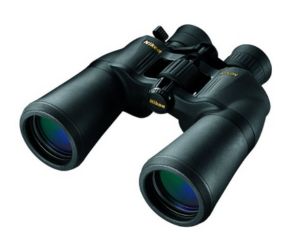
1- Nikon ACULON A211 Zoom 10-22×50
Best for Long-Distance Zoom
Quick Verdict:
The Nikon ACULON A211 Zoom 10-22×50 binoculars review comes down to one core trade-off — flexible zoom power in exchange for bulk and steadiness. It’s a strong pick for buyers who want adjustable magnification for wildlife, sports, and casual moon viewing, but it’s not the compact travel option on this list.
Best for: long-distance viewing, sports, wildlife, and casual moon-watching.
The trade-off here is simple: you get adjustable magnification in exchange for bulk. At 10x, the image holds steady enough to use handheld comfortably. Push it to 22x and you’ll see noticeably more detail on distant wildlife or sports action, thanks partly to the 50mm lenses pulling in plenty of daylight brightness.
The catch is that 22x also amplifies hand shake, and the field of view narrows pretty typical for a variable-power binocular at this price, but worth knowing going in. It isn’t waterproof, and the Porro prism body is bulkier than anything else on this list.
| Specification | Nikon ACULON A211 Zoom 10-22×50 |
| Magnification | 10x to 22x zoom |
| Objective lens | 50mm |
| Prism type | Porro |
| Prism glass | BaK4 |
| Lens coating | Multicoated |
| Waterproof | No |
Pros: flexible zoom range, large lenses for daytime brightness, solid choice for sports and wildlife, good value among Nikon’s zoom binoculars.
Cons: not waterproof, bulky for travel, shakier at 22x, tripod recommended at higher zoom, not ideal for fast-moving birds.
Bottom line: a solid, affordable Nikon zoom binocular as long as you don’t need it to be compact or waterproof.
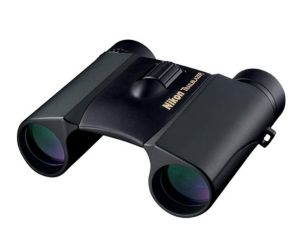
2- Nikon Trailblazer 8×25
Best for Travel and Hiking
Quick Verdict:
The Nikon Trailblazer 8×25 is the best compact pick in this comparison for travel, hiking, sports, concerts, and casual birdwatching. It is lightweight, waterproof, and easy to carry, but its small 25mm lenses are not ideal for low-light viewing.
Best for: travel, hiking, sports, concerts, and casual birdwatching.
This is the kind of binocular you forget you’re carrying. The body is small enough to slide into a backpack pocket, and at 8x the view stays steady without any bracing. Nikon nitrogen-purged the internals, so fogging isn’t an issue in humid or cold weather, and a wide field of view makes it easier to keep moving subjects in frame.
The trade-off is brightness those small 25mm lenses just can’t pull in as much light once the sun starts going down, and eye relief is a bit tight for glasses wearers. It’s not a serious stargazing tool either.
| Specification | Nikon Trailblazer 8×25 ATB |
| Magnification | 8x |
| Objective lens | 25mm |
| Field of view | 429 ft at 1,000 yards |
| Eye relief | 10mm |
| Weight | 9.9 oz |
| Waterproof/Fogproof | Yes |
Pros:
Cons:
Bottom line: if portability is the top priority, this is the clear pick. Look elsewhere if low-light performance matters to you.
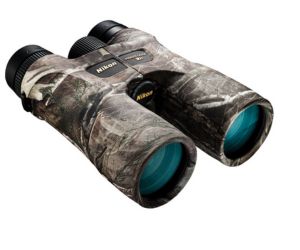
Nikon PROSTAFF 7S 10×42
Best for Wildlife and Hunting
Quick Verdict:
The Nikon PROSTAFF 7S 10×42 is a durable outdoor binocular for birdwatching, wildlife viewing, hiking, and hunting. Its 10x magnification gives extra reach, but it is less compact than smaller travel binoculars.
Best for: birdwatching, wildlife viewing, hiking, and hunting.
Wrapped in rubber armor with a roof prism body, this one’s built to take a beating outdoors without feeling heavy after a full day of use. The extra reach of 10x over 8x is genuinely noticeable when you’re trying to identify wildlife further out, and 15.5mm of eye relief is comfortable for most people, glasses included.
Field of view is a bit narrower than comparable 8×42 binoculars, and 10x is marginally harder to hold steady than 8x. It’s also an older release, so it’s worth checking current pricing against Nikon’s newer PROSTAFF P3 and P7 lines before buying.
| Specification | Nikon PROSTAFF 7S 10×42 |
| Magnification | 10x |
| Objective lens | 42mm |
| Field of view | 325 ft at 1,000 yards |
| Eye relief | 15.5mm |
| Weight | 22.8 oz |
| Waterproof/Fogproof | Yes |
Pros:
Cons:
Bottom line: a durable choice for birding, wildlife, and hunting if you’re comfortable trading a bit of compactness for extra reach.
Celestron Binoculars Reviews
Celestron’s lineup here leans into value, astronomy power, and beginner-friendly birding — one high-power astronomy binocular, and two 8×42 models for birders, one with ED glass and one without.
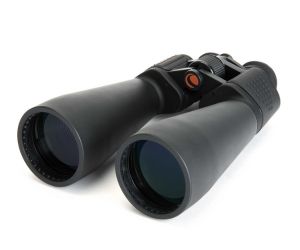
1- Celestron SkyMaster 25×70
Best for Stargazing and Moon Viewing
Quick Verdict:
The Celestron SkyMaster 25×70 is the strongest pick here for stargazing, moon viewing, and long-distance viewing from a fixed spot. Its 25x power and 70mm lenses are impressive, but you’ll need a tripod for steady views.
Best for: stargazing, moon viewing, and long-distance observation from a stable position.
The 25x magnification and 70mm lenses reveal detail that no handheld binocular on this list can touch this is a genuinely good moon-viewing tool, and it handles distant ships, ridgelines, and wildlife well when you’re set up somewhere stable. Beyond astronomy, it’s the kind of binocular you’d bring to a fixed observation point rather than carry on a hike.
At around 52 ounces, it’s heavy, and 25x magnification amplifies every small movement into visible shake. A tripod isn’t optional here it’s the only way to actually enjoy what this binocular can do.
| Specification | Celestron SkyMaster 25×70 |
| Magnification | 25x |
| Objective lens | 70mm |
| Field of view | 141 ft at 1,000 yards |
| Eye relief | 13mm |
| Weight | About 52 oz |
| Water protection | Water-resistant |
Pros:
Cons:
Bottom line: the right call for stargazing and moon viewing from a fixed spot. Skip it if you need something compact or comfortable to hold for long stretches.
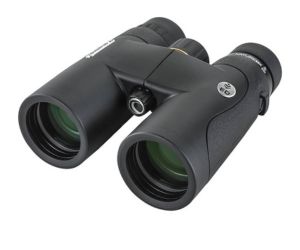
2) Celestron Nature DX ED 8×42
Best for Birdwatching Image Quality
Quick Verdict:
The Celestron Nature DX ED 8×42 is best for birdwatchers who want sharper color, better contrast, and a comfortable waterproof design. It costs more than the standard Nature DX, but the ED glass is worth it for serious birding.
Best for: birdwatching, wildlife viewing, and general outdoor use.
This is Celestron’s standout pick for birders who want a real step up in image quality. The ED glass cuts down on the color fringing you’d see around high-contrast edges in cheaper optics, which translates into more accurate color when you’re studying plumage detail. The view stays steady at 8x, the wide field of view makes it easier to track birds moving through brush, and 17.8mm of eye relief makes this one of the more glasses-friendly options in this comparison.
It costs more than the standard Nature DX, it’s not compact, and it’s not built for high-power astronomy and it stops short of premium-tier edge-to-edge sharpness, though that’s a fair trade at this price.
| Specification | Celestron Nature DX ED 8×42 |
| Magnification | 8x |
| Objective lens | 42mm |
| ED glass | Yes |
| Field of view | 393 ft at 1,000 yards |
| Eye relief | 17.8mm |
| Close focus | 6.5 ft |
| Waterproof/Fogproof | Yes |
Pros:
Cons:
Bottom line: the best Celestron pick here for birders who already know they’ll spend real time behind the glass the ED upgrade tends to pay for itself in reduced eye fatigue.
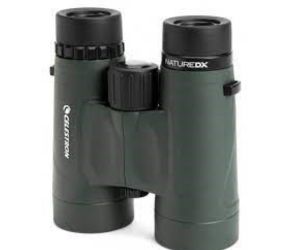
3) Celestron Nature DX 8×42
Best Budget Birding Pick
Quick Verdict:
The Celestron Nature DX 8×42 is a strong budget pick for beginner birdwatching and outdoor use. It is waterproof, easy to hold, and good for daytime viewing, but it lacks ED glass.
Best for: beginner birdwatching, hiking, and general outdoor use.
Center sharpness is genuinely good for the price, the 8x magnification is easy to hold steady, and a wide field of view combined with 6.5-foot close focus makes it simple to track backyard birds. There’s no real learning curve here it’s a straightforward, beginner-friendly binocular.
Without ED glass, there’s a bit more edge softness than the ED version above, and low-light performance is average rather than exceptional. It’s not built for astronomy, but that’s not really the point of this model.
| Specification | Celestron Nature DX 8×42 |
| Magnification | 8x |
| Objective lens | 42mm |
| Field of view | 388 ft at 1,000 yards |
| Eye relief | 17.5mm |
| Close focus | 6.5 ft |
| Waterproof/Fogproof | Yes |
Pros:
Cons:
Bottom line: an affordable, low-risk way to find out how much you’ll actually use binoculars before spending more on the ED version or a premium optic.
Nikon vs Celestron by use case
Pulling it all together by scenario:
- Birdwatching: Celestron Nature DX ED 8×42
- Stargazing: Celestron SkyMaster 25×70
- Travel and hiking: Nikon Trailblazer 8×25
- Long-distance viewing: Nikon ACULON A211 Zoom 10-22×50
- Beginners: Celestron Nature DX 8×42
- Glasses wearers: Celestron Nature DX ED 8×42
Celestron shows up more often on the birding and beginner side of things. Nikon dominates travel and hiking. That split lines up almost exactly with what each brand optimized for across these six models.
Common mistakes when choosing between them
Choosing by brand name alone. The model matters more than the logo on the barrel. A Celestron built for astronomy and a Nikon built for travel aren’t competing for the same buyer, so “which brand is better” is really the wrong question “which model fits how I’ll actually use it” is the right one.
Buying more magnification than you need. Higher isn’t automatically better. A 25x binocular like the SkyMaster needs a tripod to be usable at all; 8x or 10x is the better call for handheld birding, hiking, or travel.
Ignoring field of view. A narrow field of view makes it harder to track anything that moves birds in flight, wildlife on the move, players on a field. This matters more than most people expect until they’re actually trying to find something in the frame.
Ignoring eye relief. If you wear glasses, this is one of the most important specs on the list. Short eye relief means a cramped, uncomfortable view. Models like the Nature DX ED and PROSTAFF 7S handle this noticeably better than compact options like the Trailblazer.
Buying compact binoculars for low-light use. An 8×25 like the Trailblazer is excellent for portability, but its small 25mm lenses just can’t gather as much light as a 42mm lens can. For dawn, dusk, or shaded trails, a larger objective lens matters more than a smaller body.
Most buyer regret with binoculars traces back to one of these five mistakes rather than a bad product. Matching the model to how you’ll actually use it not the brand name or the biggest zoom number is what separates a binocular you’ll use for years from one that ends up in a drawer.
Worth considering something higher-end?
The six models above cover beginner, travel, zoom, and astronomy use cases well, but they’re not the top of either brand’s lineup. If you’ve used entry-level binoculars for a season and want more, it’s worth comparing Nikon’s Monarch series against Celestron’s TrailSeeker ED.
Nikon Monarch gets you more refined optics and stronger all-around outdoor performance than the PROSTAFF or Trailblazer. Celestron TrailSeeker ED gets you ED glass and strong birding value without jumping too far above the Nature DX ED in price. If you’re a beginner or casual user, though, none of the six models above will leave you disappointed the step-up models mainly pay off for people already using binoculars several times a week.
Buying guide: the specs that actually matter
Magnification. 8x is easiest to hold steady by hand. 10x gives more reach but is slightly less steady. A zoom range like 10-22x offers flexibility to adjust on the fly. 25x is serious power, but a tripod becomes essential to avoid image shake.
Objective lens size. 25mm is best for compact travel use. 42mm is the sweet spot for birding and general outdoor use. 50mm leans toward long-distance viewing. 70mm is built for astronomy, where gathering as much light as possible is the whole point.
Field of view. A wider field of view makes it easier to track anything that won’t sit still while you find it in the frame.
Eye relief. If you wear glasses, this matters more than almost any other spec here. Twist-up eyecups paired with longer eye relief make viewing more comfortable without removing your glasses.
Waterproofing. Nitrogen-filled, sealed housings resist fogging in humid or cold conditions and hold up against rain — genuinely important if the binoculars are actually going to see outdoor use rather than sit in a case.
ED glass. Extra-low dispersion glass reduces the color fringing that shows up around high-contrast edges in standard glass. It costs more, but the payoff is noticeably better color accuracy and sharpness.
Tripod use. As a general rule, anything above 10x magnification benefits from a tripod adapter, since higher magnification amplifies hand shake.
Handheld stability vs. low-light brightness. These get confused a lot, but they’re separate things. Stability comes down mostly to magnification and weight lower power and a lighter body are easier to hold steady. Brightness comes down mostly to objective lens size and exit pupil larger lenses pull in more light at dawn, dusk, or under tree cover. A binocular can be great at one and mediocre at the other, so check both rather than assuming a high magnification number means a brighter image.
Final verdict
Choose Nikon if you want compact travel binoculars, flexible zoom, or a durable handheld option for everyday outdoor use. Choose Celestron if you want better value for astronomy, beginner birding, ED glass, or high-power long-distance viewing. There’s no universal winner between Nikon and Celestron binoculars only the model that actually fits how you’ll use it.