As a passionate hunter, having the right equipment is crucial for a successful and enjoyable experience in the great outdoors. When it comes to spotting scopes, one of the most important factors to consider is magnification. With advancements in technology and numerous options available on the market, finding the right magnification for your spotting scope can be overwhelming. Should you go for higher magnifications or stick with lower ones? What exactly does magnification mean and how does it affect your hunting experience?
In this blog post, we will dive into everything you need to know about choosing the best magnification for your spotting scope as a hunter.
What is Spotting Scope Magnification?
Spotting scope magnification refers to the degree to which the scope enlarges the image of the object you are viewing. It is typically denoted by numbers such as “20x,” “30x,” or “40x,” indicating that the image is magnified 20, 30, or 40 times its actual size.
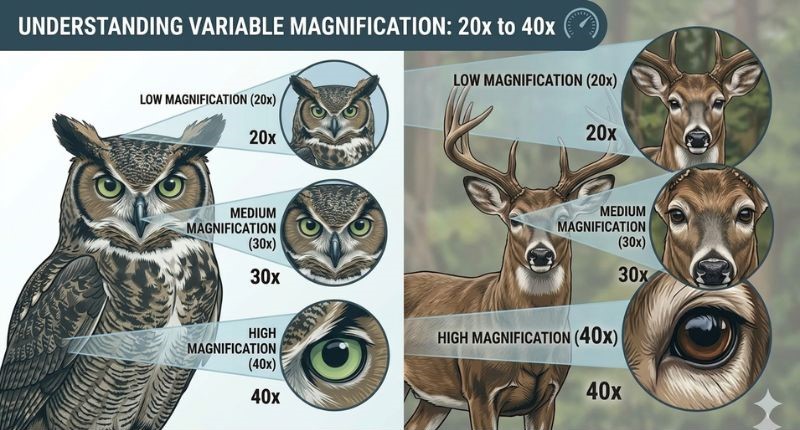
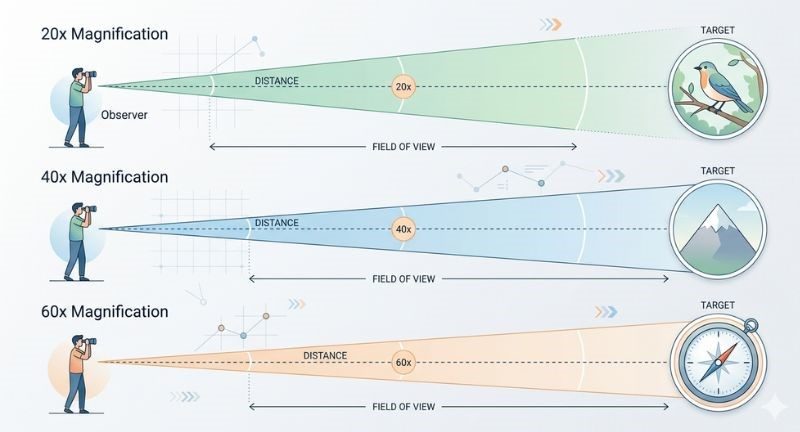
The choice of magnification depends on various factors, including the distance of the target, the level of detail required and the lighting conditions. Higher magnifications can provide more detailed views of distant objects, but they may also result in a narrower field of view and can be more susceptible to image instability due to shaky hands or wind.
Conversely, lower magnifications offer a wider field of view and greater image stability, making it easier to track moving targets. Understanding the trade-offs between different magnification levels is essential for selecting the right spotting scope for your hunting needs.
What is the Best Magnification for a Spotting Scope?
Determining the best magnification for a spotting scope largely depends on your specific hunting needs and scenarios. Generally, for most hunting applications, a magnification range between 20x to 60x is considered ideal.
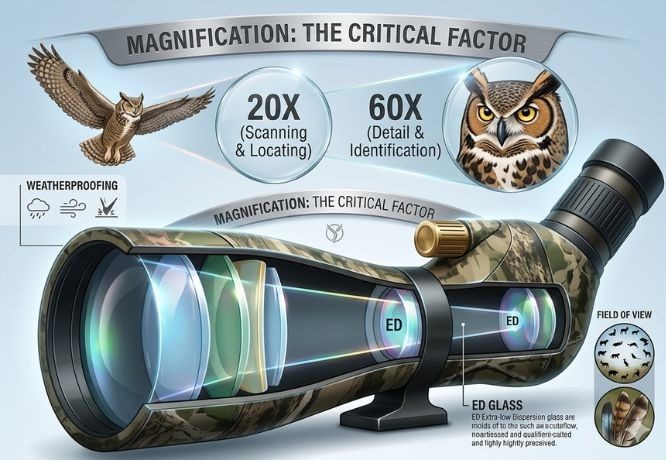
A variable magnification model is often preferred because it provides flexibility, allowing hunters to adjust the magnification based on the distance and size of the target. At lower magnifications around 20x to 30x, you can enjoy a wider field of view and better image stability, which is beneficial when scanning vast areas for game. This range is particularly useful for spotting and tracking moving animals.
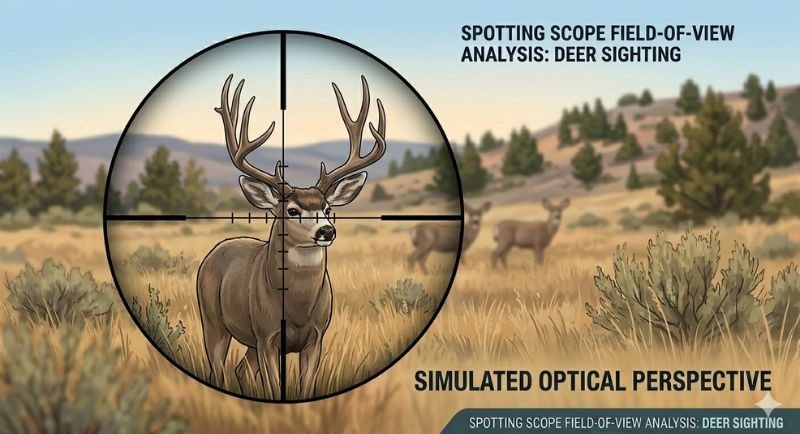
On the other hand, higher magnifications above 40x are advantageous for detailed observation of distant targets, such as assessing the size and antler structure of a deer or elk from a long distance. However, it is important to note that higher magnification may require a tripod or a very steady hand to avoid image shake, especially in windy conditions.
Also, high magnifications can be less effective in low-light situations, which are common during dawn and dusk – prime hunting hours. Therefore, a spotting scope with variable magnification, offering a full range of 20x to 60x, is often the most versatile and practical choice for hunters.
Factors to Consider When Choosing Magnification
When selecting the appropriate magnification for your spotting scope, several key factors should be taken into account:
- Distance to the Target: The distance between you and your target plays a significant role in determining the optimal magnification. If you regularly hunt in areas where targets are several hundred yards away, higher magnifications will be more beneficial. However, for closer targets, lower magnifications will suffice and provide a clearer, broader view.
- Field of View (FOV): Field of view is the area visible through your spotting scope at a given distance. Higher magnifications typically result in a narrower FOV, which can make it challenging to locate and track moving targets. Conversely, lower magnifications offer a wider FOV, aiding in the quick spotting of the game.
- Lighting Conditions: Consider the lighting conditions you’ll be hunting in. High magnification scopes can struggle in low light conditions, resulting in dimmer images. If you do a lot of hunting during dawn or dusk, lower magnification settings might provide better visibility.
- Stability and Image Shake: Higher magnifications can amplify image shake caused by hand movements or wind. Using a tripod can mitigate this issue, but if you prefer handheld use, lower magnifications will offer more stable images.
- Detail vs. Mobility: Higher magnifications allow for more detailed observations, which is essential for assessing the game from a distance. However, this comes at the cost of mobility and ease of tracking. Lower magnifications provide greater mobility, with easier and quicker target acquisition.
- Personal Preference and Comfort: Personal comfort with varying magnifications can greatly influence your choice. Spend some time using different magnifications to understand what works best for your specific needs and comfort level.
By carefully considering these factors, you can make an informed decision and select a spotting scope magnification that enhances your hunting experience.
Recommended Magnification for Different Activities
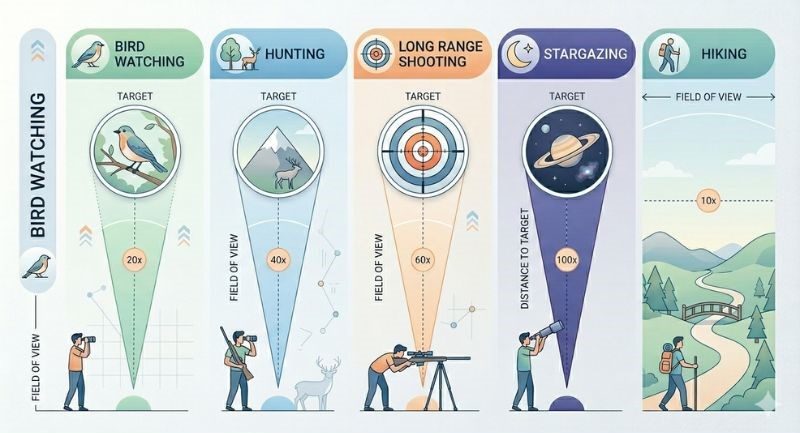
When selecting the best magnification for your spotting scope, it’s crucial to consider the specific activity you’ll be engaging in. Below is a table that breaks down recommended magnifications for various outdoor activities to help you make an informed choice:
| Activity | Recommended Magnification | Notes |
| Bird Watching | 20x – 40x | Provides a good balance between detail and field of view, ideal for observing bird features and behaviors. |
| Hunting (General) | 20x – 60x (variable) | Offers flexibility to adjust based on distance and target size, useful for both scanning and detailed observation. |
| Long-Range Shooting | 40x – 60x | Higher magnifications are helpful for detailed target identification and precision shooting at long distances. |
| Nature Observation | 20x – 50x | Provides a nice balance for observing the landscape and wildlife in greater detail. |
| Stargazing | 30x – 60x | Higher magnifications allow for detailed observations of celestial objects. |
| Hiking and Backpacking | 15x – 30x | Lower magnifications ensure a wider field of view and easier tracking while on the move. |
| Surveillance and Security | 25x – 50x | Offers detailed viewing from a distance while allowing for a reasonably wide field of view. |
| Marine and Boating | 20x – 40x | Moderate magnification helps to balance instability and gives a clear view in a dynamic environment. |
By using this table as a guide, you can determine which magnification levels align with your specific needs and activities, ensuring your spotting scope is both effective and enjoyable to use.
Additional Tips for Choosing a Spotting Scope
When selecting a spotting scope, there are several other factors to keep in mind to ensure you make the best choice for your needs:
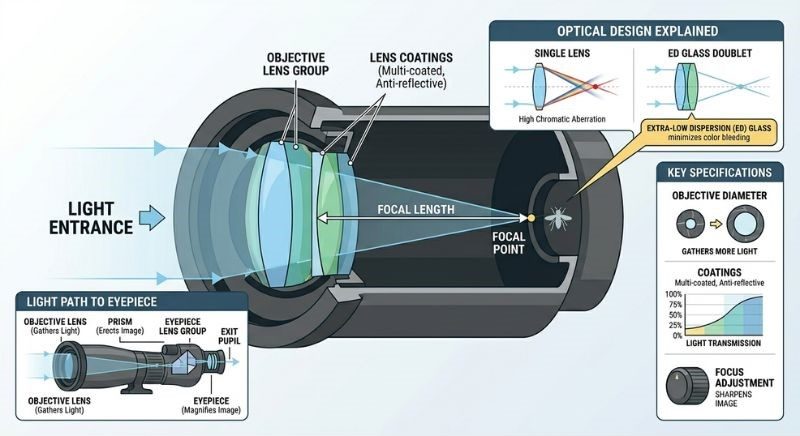
- Optical Quality: Look for scopes with high-quality lenses, often indicated by fully multi-coated optics, which enhance light transmission and image clarity. High-grade glass, such as ED (Extra-low Dispersion) glass, can significantly improve color fidelity and reduce chromatic aberration.
- Objective Lens Size: Larger objective lenses (measured in millimeters) gather more light, offering a brighter image, especially in low-light conditions. However, they also add to the size and weight of the scope, which could be a consideration if you need something more portable.
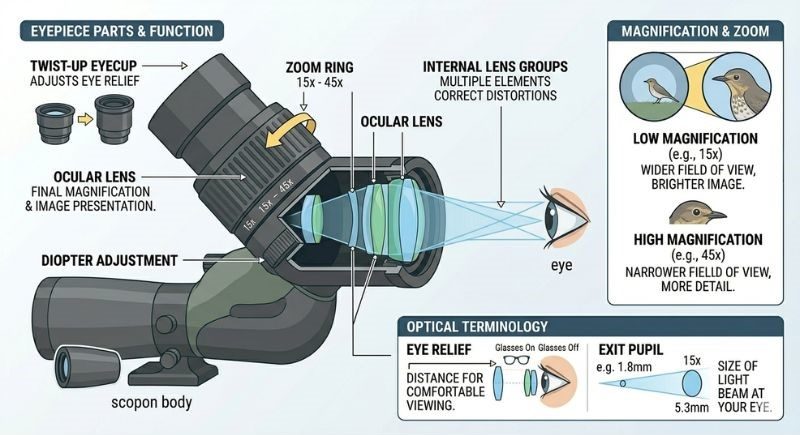
- Eyepiece Design: Some spotting scopes come with fixed eyepieces, while others offer interchangeable eyepieces for greater versatility. Consider whether you prefer the convenience of a built-in eyepiece or the adaptability of interchangeable options.
- Body Design and Weight: The overall design and weight of the scope can impact its usability. Straight body designs are generally easier for quick spotting, while angled bodies are better for prolonged observations. Also, lightweight materials can enhance portability but may come at a cost to durability.
- Waterproof and Fogproof: If you plan to use your spotting scope in various weather conditions, ensure it is both waterproof and fogproof. Look for scopes that are nitrogen or argon-purged and O-ring sealed to prevent moisture and internal fogging.
- Tripod Compatibility: Stability is crucial for high magnification settings, so ensure your scope is compatible with a robust and stable tripod. Some scopes come with built-in tripod mounts, which can simplify setup.
- Warranty and Customer Support: Investing in a high-quality spotting scope can be a significant cost, so look for brands that offer strong warranties and reliable customer support. A good warranty can provide peace of mind and protect your investment over time.
By considering these additional tips, you can choose a spotting scope that will provide clear, precise images and reliable performance in a variety of outdoor conditions.
Final Thoughts
Whether you’re bird-watching, hunting, or stargazing, the right spotting scope will allow you to observe the natural world in greater detail and with greater clarity. Remember to prioritize your comfort and personal preferences in addition to technical specifications. Ultimately, a well-chosen spotting scope will be a valuable tool, offering years of enjoyment and discovery in the great outdoors.
By considering factors such as terrain, target distance and personal preference, you can determine the ideal magnification range for your specific needs.
So next time you head out into the wilderness, don’t forget to pack your spotting scope and put these tips into practice. Don’t settle for mediocre spotting scope performance – strive for excellence and elevate your hunting game with the perfect magnification.